High Fiber Breakfast Foods: A Simple Way To Start Your Day
By:Author:Asian Diet Editorial
Updated on:October 18, 2026

- Does a High Fiber Breakfast Actually Change Your Day?
- How Fiber Actually Delays Morning Hunger
- How Much Fiber a Morning Meal Actually Needs
- Whole Food Fiber Versus a Fiber Supplement
- Making Fiber Work on a Normal Weekday Morning
- The Myth That One Breakfast Changes Your Whole Day
- What Actually Changes How Full a Breakfast Keeps You
- Mistakes That Undercut a High Fiber Breakfast
- Building High Fiber Breakfasts With Asian Diet
- Starting Tomorrow Morning With One Simple Swap
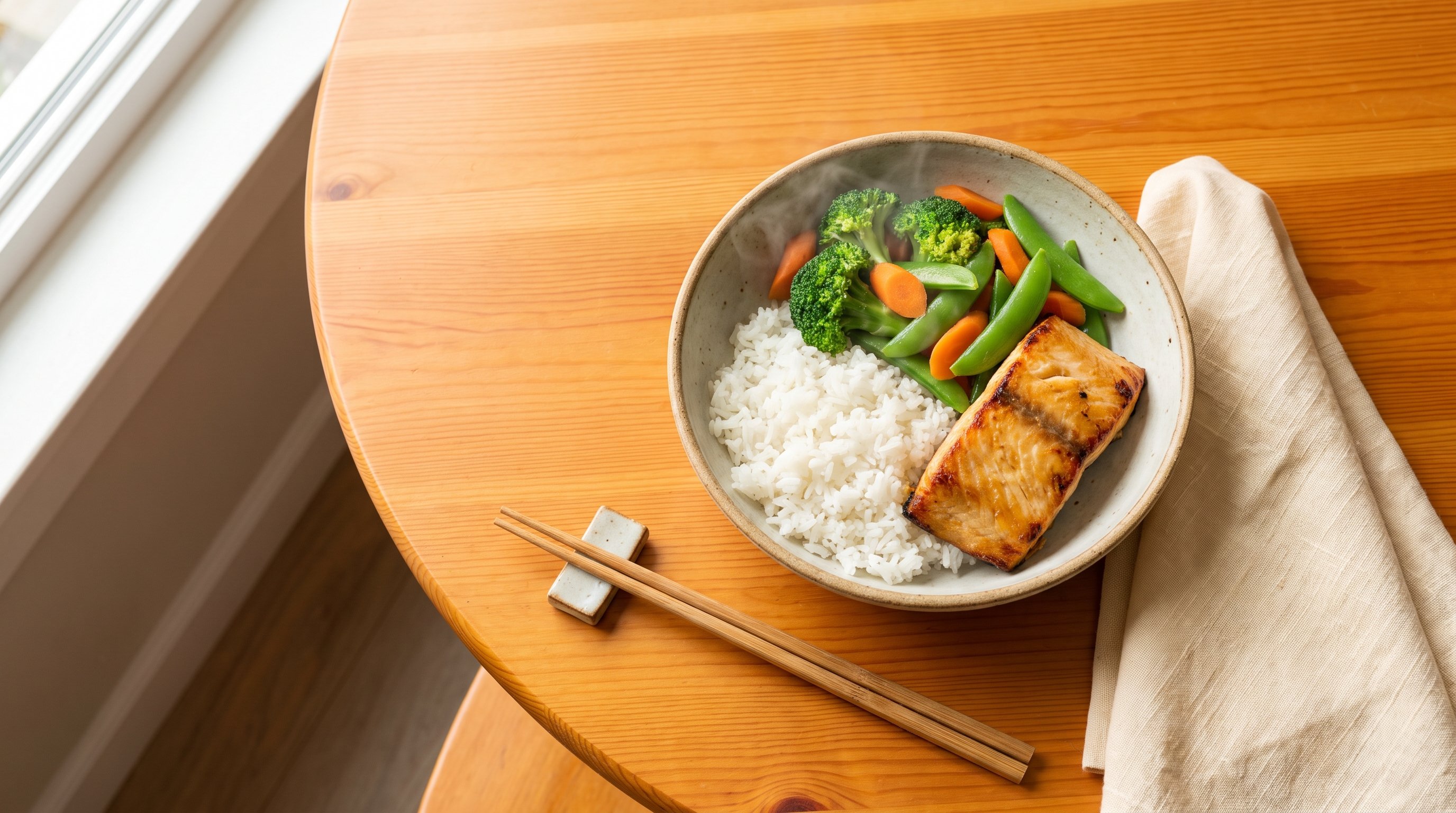
High fiber breakfast foods are meals built around oats, beans, fruit, vegetables and whole grains instead of refined flour and sugar, and they keep you fuller for longer because fiber slows down digestion.
Fiber adds bulk and takes longer to break down, so food moves through the stomach more slowly and blood sugar rises less sharply after you eat it.
This article covers whether fiber at breakfast actually changes anything, how much to eat, how to fit it into a rushed morning, and the mistakes that quietly undo it.
Does a High Fiber Breakfast Actually Change Your Day?
Yes, in a measurable way: fiber absorbs water and forms a gel-like bulk in the gut, which slows gastric emptying and stretches out digestion.
That slower digestion means a steadier release of glucose into the blood rather than a sharp spike and the crash that tends to follow it.
Here is the simple arithmetic: a breakfast with 8-10 grams of fiber takes noticeably longer to digest than one with 1-2 grams, so hunger signals arrive later rather than within an hour or two.
That alone will not change the number on a scale, but it does change how much you reach for at 10am, and that is where the real difference tends to show up over a week.
How Fiber Actually Delays Morning Hunger
Two separate mechanisms are at work here, and both matter for how a breakfast holds you over.
Soluble Fiber Slows Digestion
Soluble fiber, found in oats, beans and fruit, dissolves into a thick gel in the stomach, which physically slows the rate food empties into the small intestine.
Insoluble Fiber Adds Bulk
Insoluble fiber, found in whole grains, skins and vegetables, does not dissolve but adds bulk to the meal, which helps you feel full on fewer calories than a refined equivalent.
Together these two types mean a fiber-rich breakfast sits with you longer than a bowl of refined cereal of the same size.
How Much Fiber a Morning Meal Actually Needs
A useful working target is 8-12 grams of fiber at breakfast, which is roughly a third of a common daily goal of 25-30 grams spread across the day.
Building Toward That Number
A bowl of oats with berries and a spoon of chia seeds, or wholegrain toast with beans, gets you into that range without any specialist ingredients.

The table below shows how some common breakfast foods compare on fiber content per typical serving.
| Food | Serving | Fiber |
|---|---|---|
| Oats, cooked | 1 cup | 4g |
| Chia seeds | 2 tbsp | 10g |
| Baked beans | 1 cup | 13g |
| Wholegrain toast | 2 slices | 4g |
| Raspberries | 1 cup | 8g |
Whole Food Fiber Versus a Fiber Supplement
A fiber supplement can technically hit the same gram target as a bowl of oats and fruit, but it skips the part that actually makes breakfast satisfying.
Whole foods bring volume, chewing time and flavour, all of which play into how full you feel, not just the fiber count on a label.
A supplement is easier to measure, but a bowl of porridge with fruit is easier to want to eat again tomorrow, and that repeatability is what actually matters over weeks.
The route that gets repeated beats the route that is technically more efficient on paper.
Making Fiber Work on a Normal Weekday Morning
Most weekday mornings do not leave room for a long prep session, so the fiber has to come from food that is already close to ready.
Overnight oats made the night before, a tub of pre-cooked beans, or frozen berries added straight to a bowl all solve this without extra effort at 7am.
This is where a meal plan built around food you already like helps, because Asian Diet lays out fiber-friendly breakfast options in advance so there is no decision to make while half asleep.
Having the choice already made is often the difference between a fiber-rich breakfast and whatever is fastest to grab.
The Myth That One Breakfast Changes Your Whole Day
A high fiber breakfast will not undo a low-fiber lunch and dinner, and it will not target fat anywhere on the body, because no food works that way.
The body does not direct fat loss to one area based on what was eaten that morning, no matter how the meal is marketed.
What a fiber-rich breakfast actually does is make the first few hours of the day steadier, which tends to carry through to fewer impulsive snack choices later.
That is a real effect, but it is a small, cumulative one, not a single meal rewriting the rest of the day.
What Actually Changes How Full a Breakfast Keeps You
Fiber content is only part of the picture; a few other factors decide whether a breakfast actually holds you over.
The Three Biggest Factors
- Protein alongside the fiber - adding eggs, yoghurt or beans to a fiber-rich base extends fullness further than fiber alone.
- Portion size - a small high-fiber breakfast still runs out of staying power by mid-morning, so volume matters.
- How much sugar is mixed in - a fiber-rich cereal loaded with added sugar still spikes blood sugar, cancelling out some of the benefit.
Mistakes That Undercut a High Fiber Breakfast
Relying on Cereal Box Marketing
A cereal labelled high fiber can still carry a lot of added sugar, so checking the fiber grams and sugar grams side by side matters more than the front of the box.
Adding Fiber Too Fast
Jumping from almost no fiber to 15 grams overnight can cause bloating, so building up over a week or two is gentler on digestion.

Skipping Liquids
Fiber needs water to do its job properly, so a dry high-fiber breakfast without enough fluid alongside it works against the goal rather than for it.
Treating Breakfast As the Whole Solution
One fiber-rich meal cannot compensate for a day that is otherwise low in vegetables and whole grains, so the rest of the day still needs attention.
Building High Fiber Breakfasts With Asian Diet
Finding fiber-rich breakfast ideas that do not feel repetitive is often the real obstacle, not the fiber itself.
Asian Diet pulls from 1000+ recipes to build a tailored plan, so breakfast options rotate instead of sticking to the same bowl of oats every day.
Progress tracking in the app also covers water intake alongside food, which matters since fiber needs fluid to move through the body as it should.

Power Your Body Daily
Eat Clean Every Day
Starting Tomorrow Morning With One Simple Swap
The easiest place to start is a single swap: trade refined toast or sugary cereal for oats, beans or fruit for one week and notice how mid-morning hunger shifts.
Asian Diet can take the guesswork out of which swaps actually add up to a useful amount of fiber, so the choice each morning gets simpler rather than harder.
FAQ
It can support a calorie deficit by keeping you fuller for longer, which may reduce snacking, but fiber on its own does not cause weight loss. The bigger picture of total calories across the day still decides the outcome.
Fruit contributes fiber but usually not enough on its own to hit a useful morning target, since a cup of berries provides roughly 8 grams. Pairing it with oats, seeds or wholegrain toast gets closer to a fuller range.
Bloating usually means the fiber increase happened too quickly or without enough water alongside it. Easing in gradually over a week or two and drinking more fluid tends to settle this.
Asian Diet lays out tailored meal plans that include fiber-rich breakfast options, which removes the need to calculate grams manually each morning. It also tracks water intake, which matters since fiber relies on fluid to work properly.
Share this post