Healthy Cooking: A Simple Way To Eat Better At Home
By:Author:Asian Diet Editorial
Updated on:October 18, 2026
- What a Week of Home-Cooked Meals Looks Like
- How Often You Need to Cook for It to Count
- Why Home Cooking Beats Eating Out for Good
- Making Healthy Cooking Work Around a Real Week
- Adapting a Cooking Routine to Your Life Stage
- When Home Cooking Starts to Feel Normal
- Letting Asian Diet Take the Guesswork Out of Cooking
- Turning Tonight's Dinner Into a Repeatable Habit
Healthy cooking is simply making most of your own meals from whole ingredients, often enough that takeaway and packaged food become the exception rather than the rule. It works because it hands you control over what goes into the pan - salt, oil, portion size - instead of leaving those choices to a kitchen you can't see.
The mechanism is plain arithmetic: a meal cooked from rice, vegetables, protein and a measured spoon of oil has a predictable calorie and nutrient profile, while a restaurant plate does not. That predictability is what makes a deficit or a balanced week achievable without guesswork.
This guide covers what a realistic cooking week looks like, how often you actually need to cook, why simple home meals beat an all-or-nothing meal plan, and how to keep it going past the first few weeks.
What a Week of Home-Cooked Meals Looks Like
A realistic week doesn't mean cooking three fresh meals a day from scratch. It means picking a handful of simple, repeatable dishes and rotating them so dinner stops being a daily decision.
A Sample Week
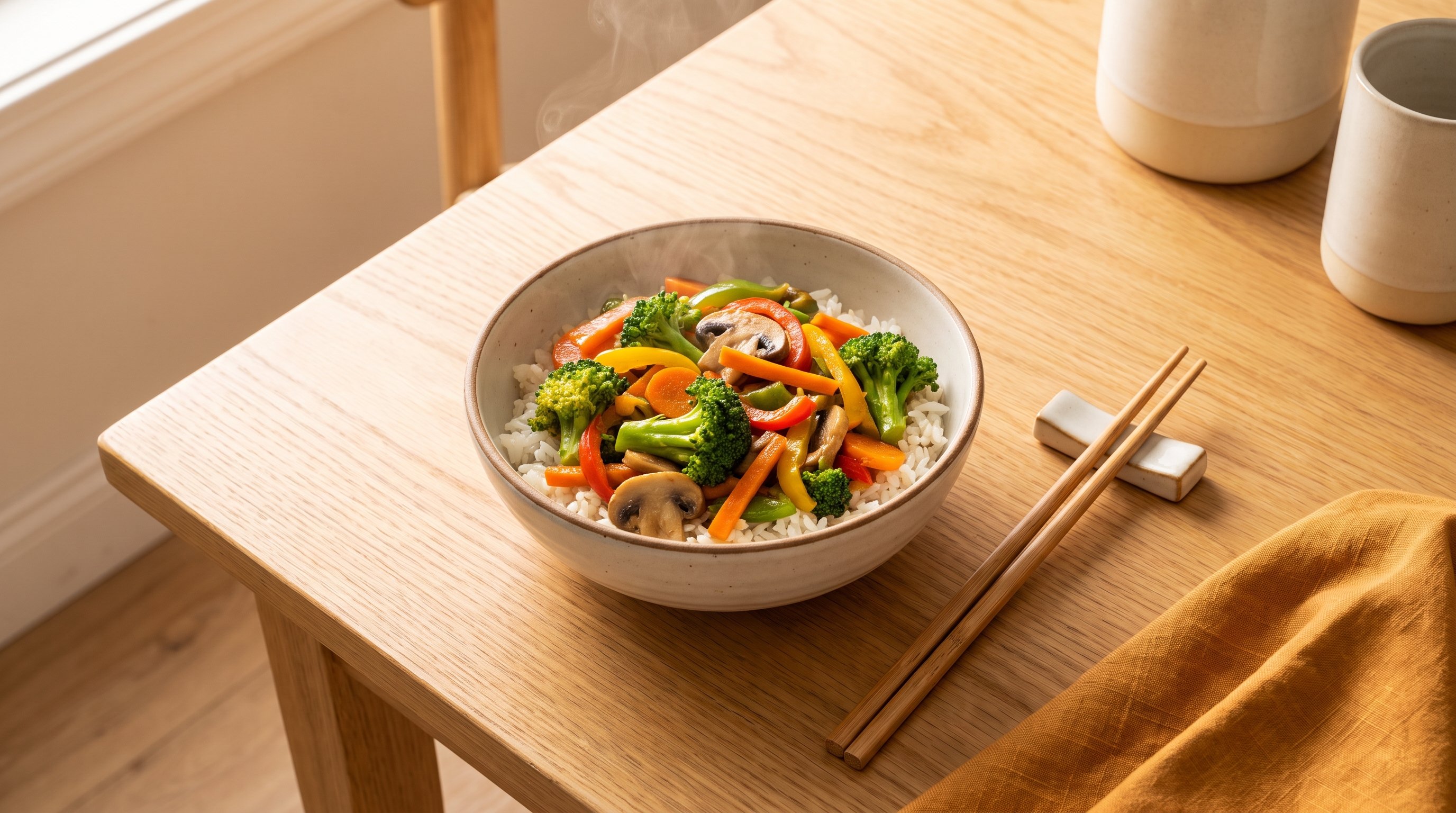
- Monday - stir-fried vegetables with tofu or chicken over rice
- Tuesday - leftover stir-fry rebuilt into a noodle soup
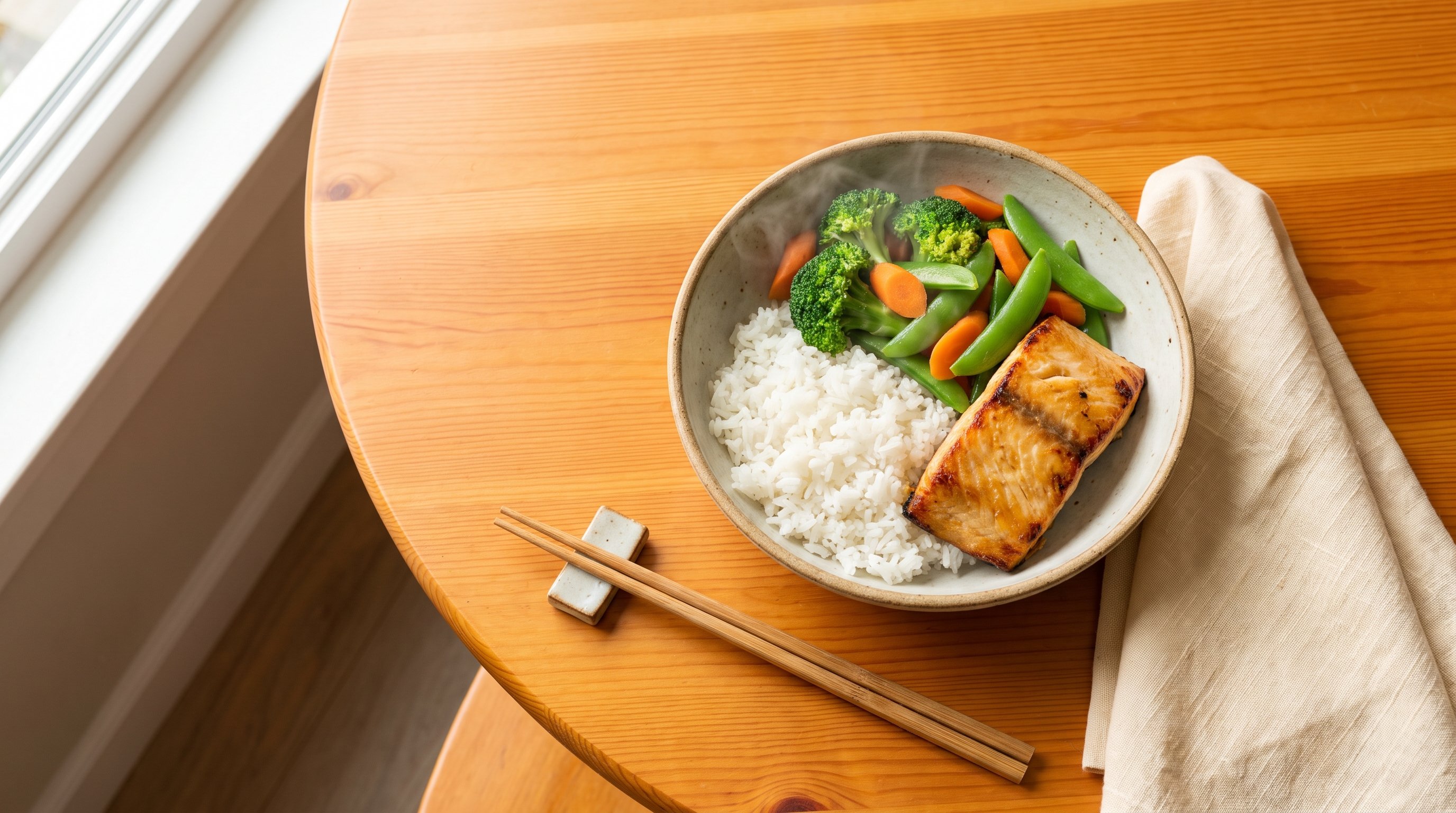
- Wednesday - grilled fish, steamed greens, and a simple broth
- Thursday - a one-pot curry made in batch and portioned for two days
- Friday - fried rice using whatever vegetables are left in the fridge
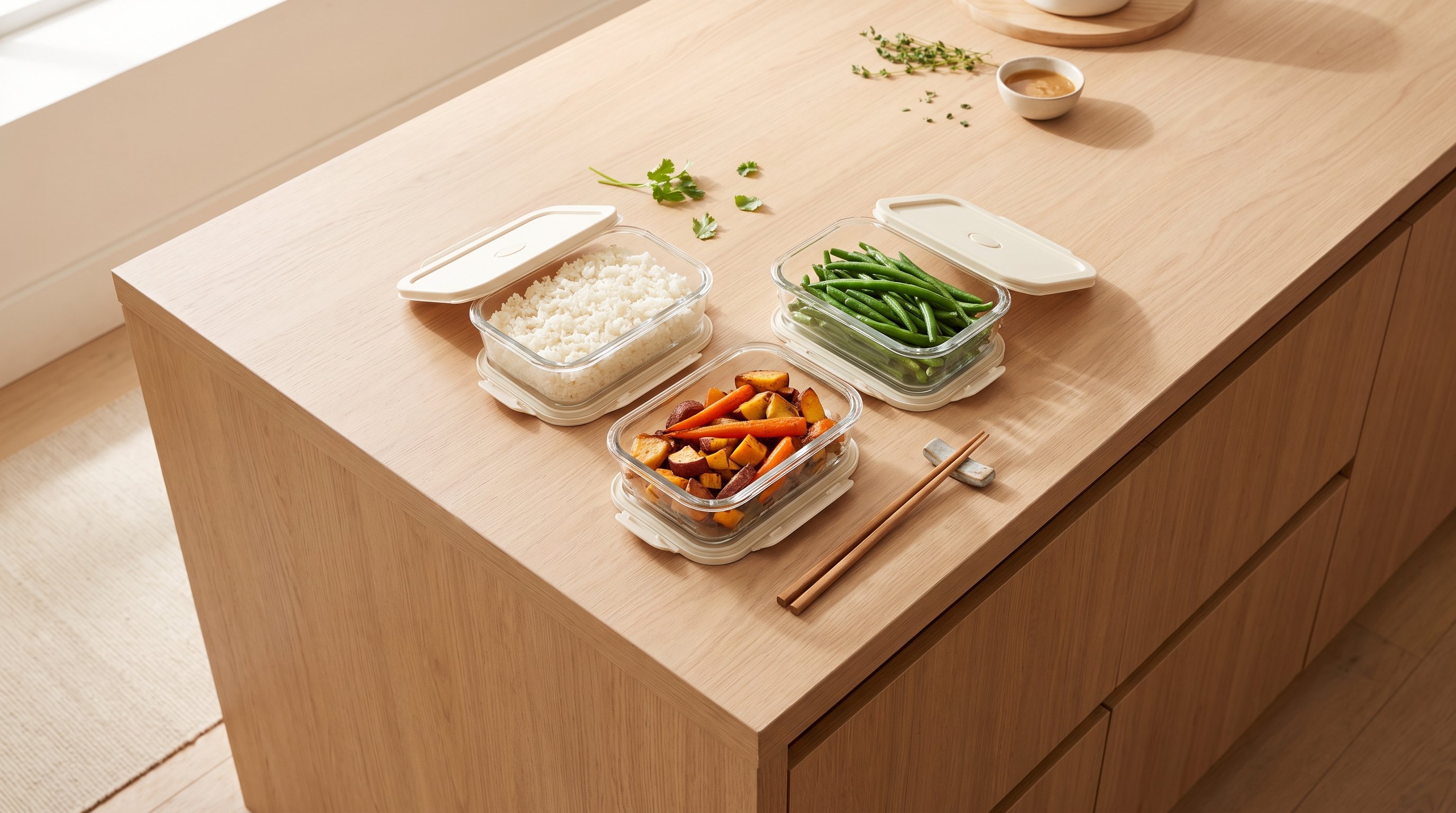
- Weekend - one slower dish, like dumplings or a slow-cooked stew, plus a cook-ahead session for the week to come
Notice the pattern: one cook, two meals. That single move removes half the daily decisions without any extra effort on the second day.
How Often You Need to Cook for It to Count
Finding a Number That Holds
There's no fixed rule, but a useful starting point is cooking the majority of your meals - most days, most weeks - rather than chasing a perfect streak. Missing a day doesn't undo the week before it.
| Stage | Suggested Frequency |
|---|---|
| Getting started | 3 to 4 dinners a week |
| Building the habit | 5 dinners a week |
| Fully settled routine | 6 to 7 dinners a week |
| Busy or travel week | 2 to 3 dinners, rest simple |
| Batch-cooking approach | 1 big cook, 2 to 3 meals |
Whatever number you land on, consistency across weeks matters more than hitting a target in any single one.
Why Home Cooking Beats Eating Out for Good
The harder route is eating out and trying to will yourself into smarter orders every single time. The easier route is cooking a version of the same meal at home, where the ingredients are already measured out in front of you.
Willpower run through a restaurant menu seven days a week eventually loses, not because people lack discipline, but because the environment keeps changing. A home kitchen stays the same, which is exactly what makes it easier to repeat.
This is the whole case for home cooking over dining out: not that restaurant food is forbidden, but that a kitchen you control is simply less work to manage day after day.
Making Healthy Cooking Work Around a Real Week
Real weeks have late meetings, tired evenings and nights when nobody wants to touch a chopping board. The fix isn't more discipline, it's fewer decisions - the same handful of dishes on rotation, with one bigger cook feeding two or three meals.
This is where a meal plan built around food you already like helps, because it removes the question of what to cook before it even comes up. Asian Diet offers over 1,000 recipes alongside smart calorie guidance, so a dinner decision turns into picking from a shortlist rather than starting from a blank page.
Pairing that with progress tracking - step counts, water intake, weight - keeps the cooking habit tied to something you can see moving, which makes it easier to notice when the routine is actually working.
Adapting a Cooking Routine to Your Life Stage
If You're Starting From Zero
Pick three dishes you already like and learn to make them well before adding anything new. Three solid meals on rotation beat ten half-remembered recipes.
If You're Short on Time
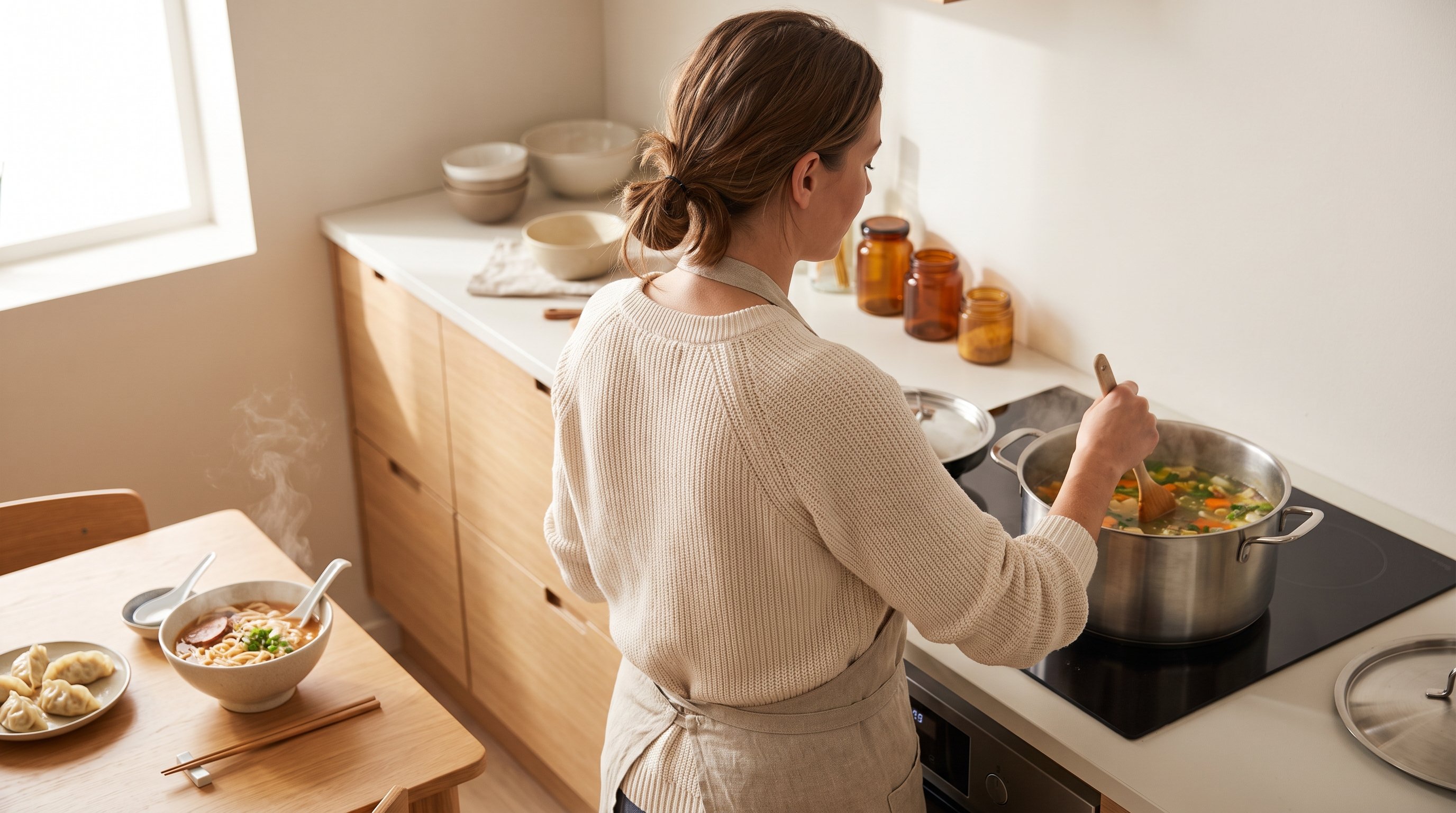
Batch-cook once and split it across two or three meals rather than cooking fresh every night. A single pot of curry or soup can quietly cover half the week.
If You're Cooking for an Older Household
Softer textures and gentler spicing don't have to mean less flavour - steamed, braised and simmered dishes often suit older appetites better than fried food anyway.
If You're Cooking on a Tight Budget
Rice, eggs, frozen vegetables and whatever protein is on offer can carry a whole week of meals. The cost of cooking at home stays low precisely because nothing goes to waste when it's planned around what you already have.
When Home Cooking Starts to Feel Normal
The first couple of weeks are the slow part, when every meal still feels like a decision and the shopping list takes longer than it should. That's normal and it's exactly where most people quit, usually right before it gets easier.
Keep the same handful of dishes on rotation rather than chasing variety too early. Once the shopping list repeats itself and the cooking stops needing a recipe in front of you, the habit has quietly taken hold - there's no fixed date for that, it just depends on how often you're actually in the kitchen.
Letting Asian Diet Take the Guesswork Out of Cooking
Cooking healthy meals every week is simple in theory and genuinely tiring in practice, mostly because of the constant decisions - what to buy, what to cook, how much to eat. Asian Diet removes a chunk of that load with a tailored meal plan built around Asian cuisines, so the recipes already fit the way you want to eat.
The app pairs those recipes with smart calorie guidance and progress tracking, so you're not cooking blind and then wondering later whether it added up to anything. Add in nutrition guides and motivating challenges, and the whole routine has some structure behind it instead of relying on memory and good intentions alone.
Power Your Body Daily
Eat Clean Every Day
Turning Tonight's Dinner Into a Repeatable Habit
Healthy cooking doesn't need a full kitchen overhaul or a long list of new ingredients - it needs three dishes you can make without thinking and a plan to repeat them. Start there, and let the rest build slowly from the meals already in front of you.
Pick one dish to cook tonight, and plan to make a double batch of it so tomorrow's meal is already done. If the recipe shortlist is the part that keeps stalling you, Asian Diet's recipe library is built to shorten that decision down to a few taps.
FAQ
It helps because it makes portion size and ingredients visible and controllable, which is most of what a calorie deficit actually depends on. It's not that home food is magic, it's that it's easier to measure than a restaurant plate.
Usually the opposite, since staple ingredients like rice, eggs and frozen vegetables cost far less per meal than a takeaway order. The expense usually comes from over-shopping, not from cooking itself.
Batch-cook one larger dish and split it across two or three meals instead of starting from scratch each night. Even one cook a week, done this way, covers more ground than it looks like it should.
A small rotation of four or five dishes is usually enough to avoid burnout, and swapping one dish every few weeks keeps it fresh without starting over. Asian Diet's recipe library makes that swap easy since there's always another dish on the list that fits the same basic routine.
Share this post