Leg Workout At Home: A Simple No-Equipment Plan
By:Author:Asian Diet Editorial
Updated on:October 18, 2026
- What a Week of Home Leg Training Looks Like
- How Many Sets and Reps Actually Add Up
- Bodyweight Squats Versus a Loaded Gym Leg Day
- Fitting Leg Training Around a Packed Schedule
- Adjusting Leg Moves for Different Bodies and Schedules
- When Leg Strength Starts to Feel Different
- Making a Home Leg Routine Easier With Asian Diet
- Getting Your First Session Done Today
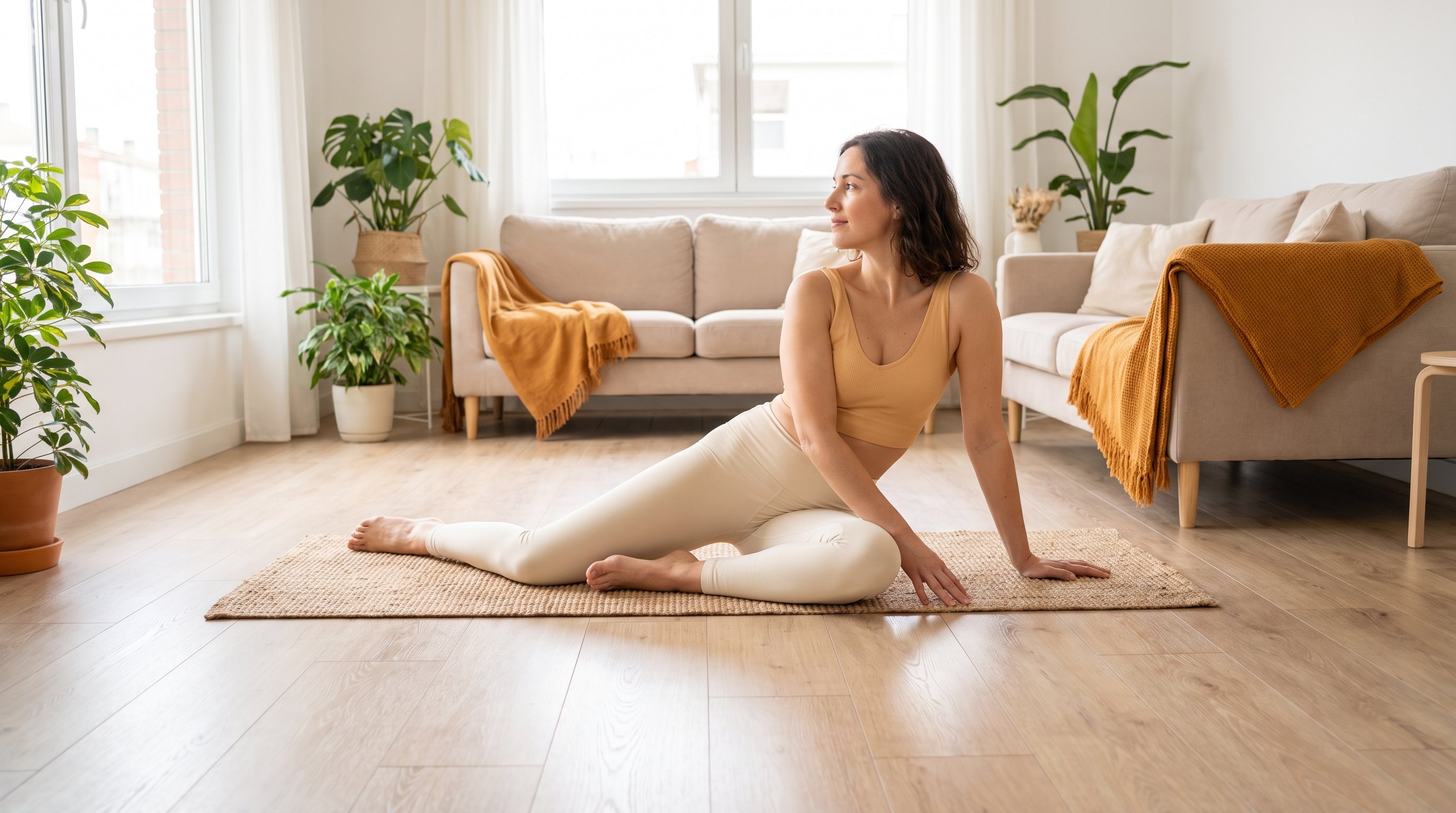
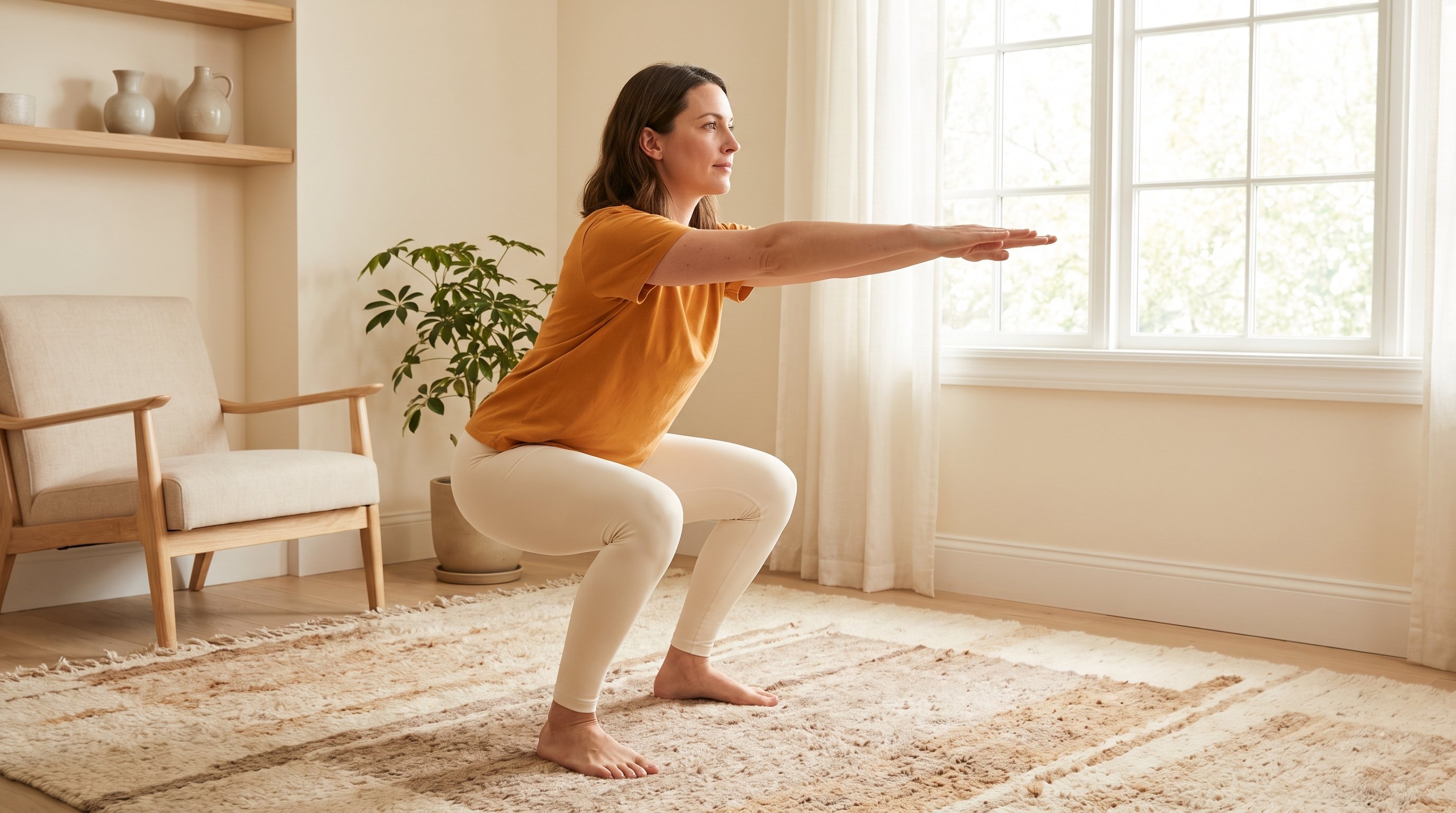
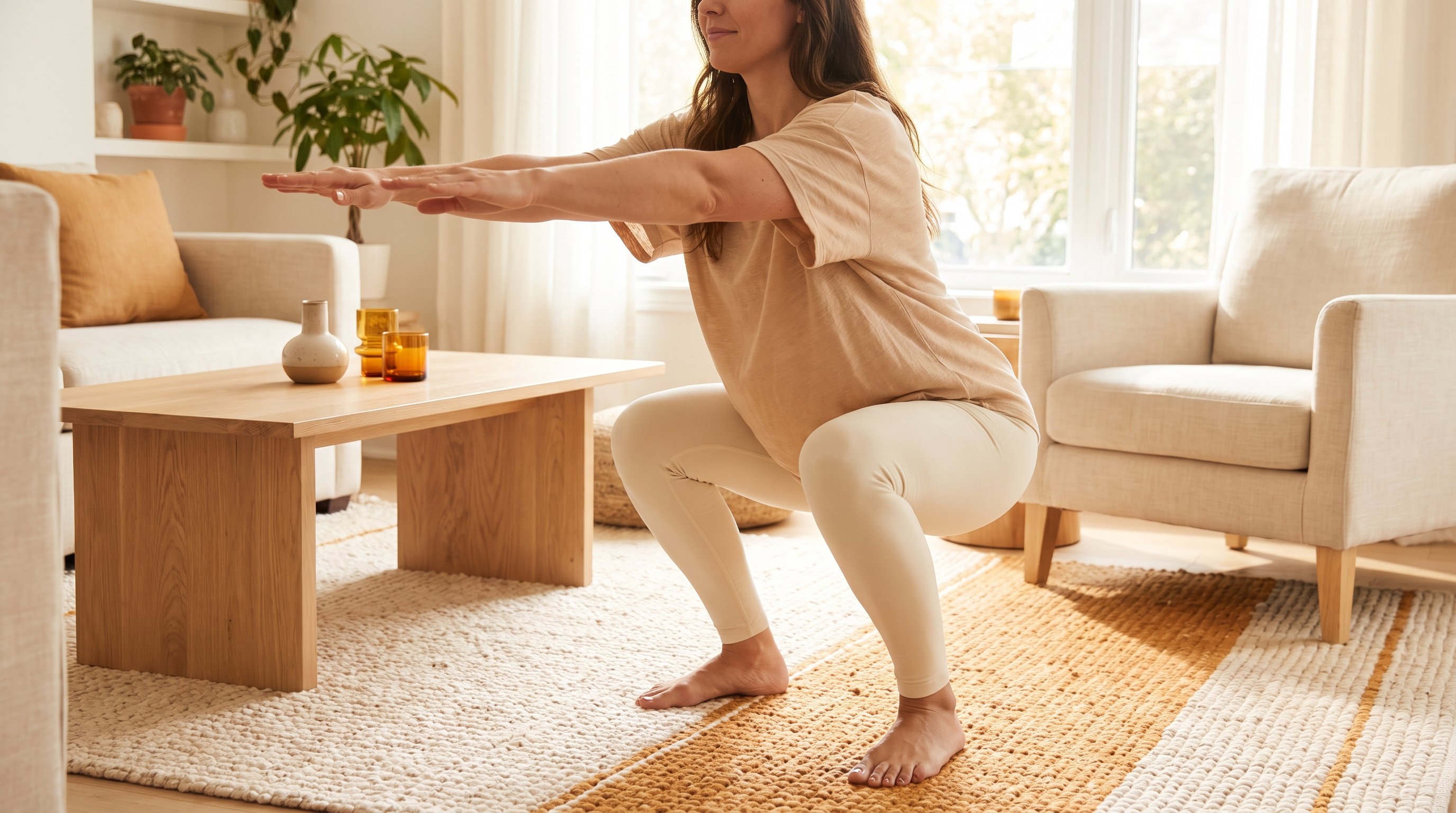
A leg workout at home works because bodyweight moves like squats, lunges and step-ups load the same muscles a gym machine does - just using your own weight instead of a stack of plates.
The mechanism is simple: muscles respond to being asked to work harder than usual, and a staircase, a chair or a patch of floor can ask that just as well as a leg press.
This guide covers what a week of home leg training can look like, how often to train, why the simple version tends to stick better than a complicated one, and how it fits around a normal week.
What a Week of Home Leg Training Looks Like
Here's one way to spread leg work across a week without needing a gym or any kit.
Sample Weekly Split
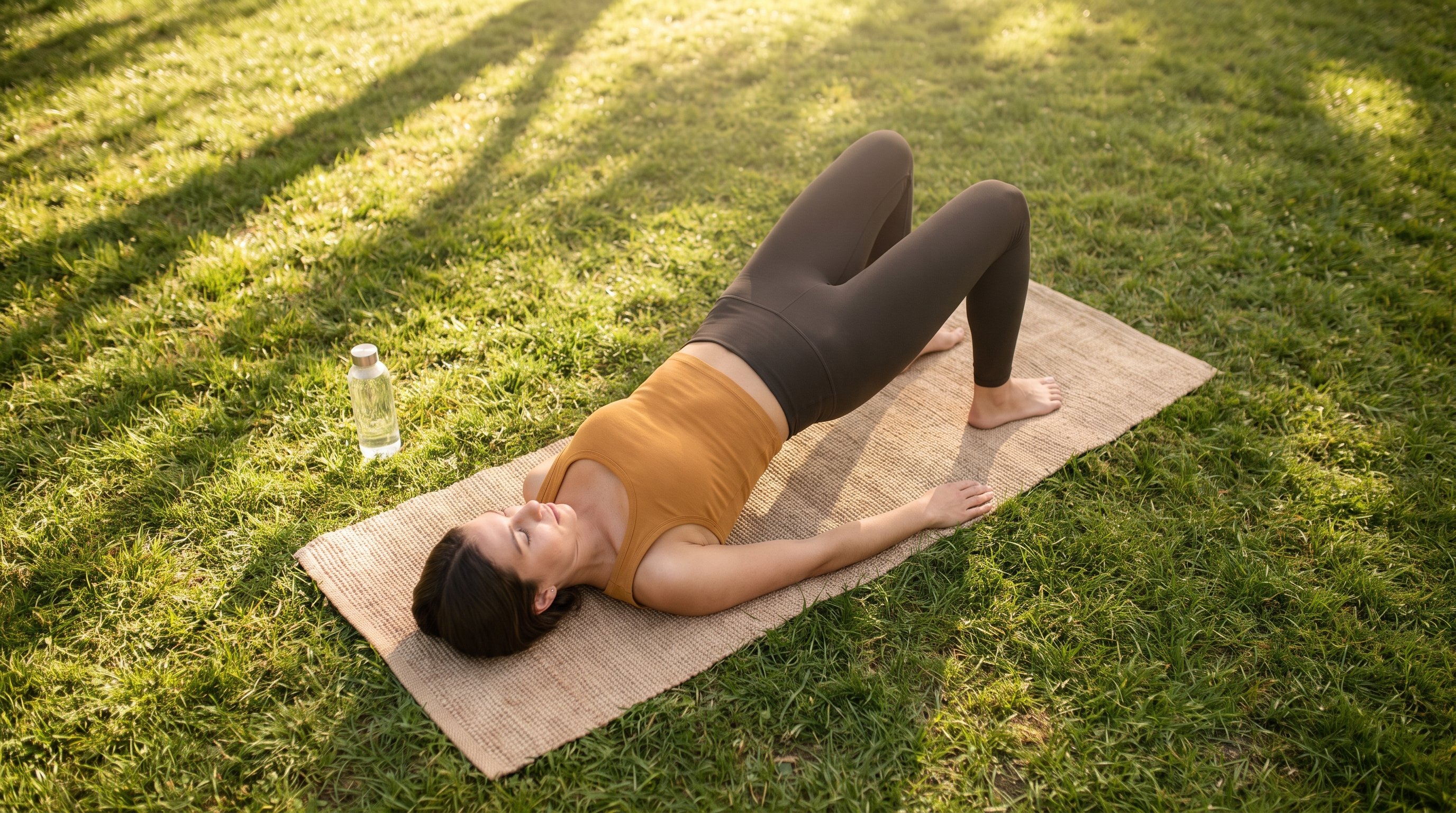
- Monday - squats, glute bridges, calf raises
- Tuesday - rest or a walk
- Wednesday - lunges, step-ups on a stair, wall sits
- Thursday - rest or gentle stretching
- Friday - squats, single-leg glute bridges, calf raises
- Weekend - one longer walk, legs otherwise resting
That's two to three focused sessions a week, each one repeatable with nothing more than floor space and maybe a sturdy chair.
How Many Sets and Reps Actually Add Up
A Starting Point You Can Copy
For most home leg moves, three sets of ten to fifteen reps per exercise is a reasonable place to start, with a short rest between sets.
| Exercise | Sets | Reps |
|---|---|---|
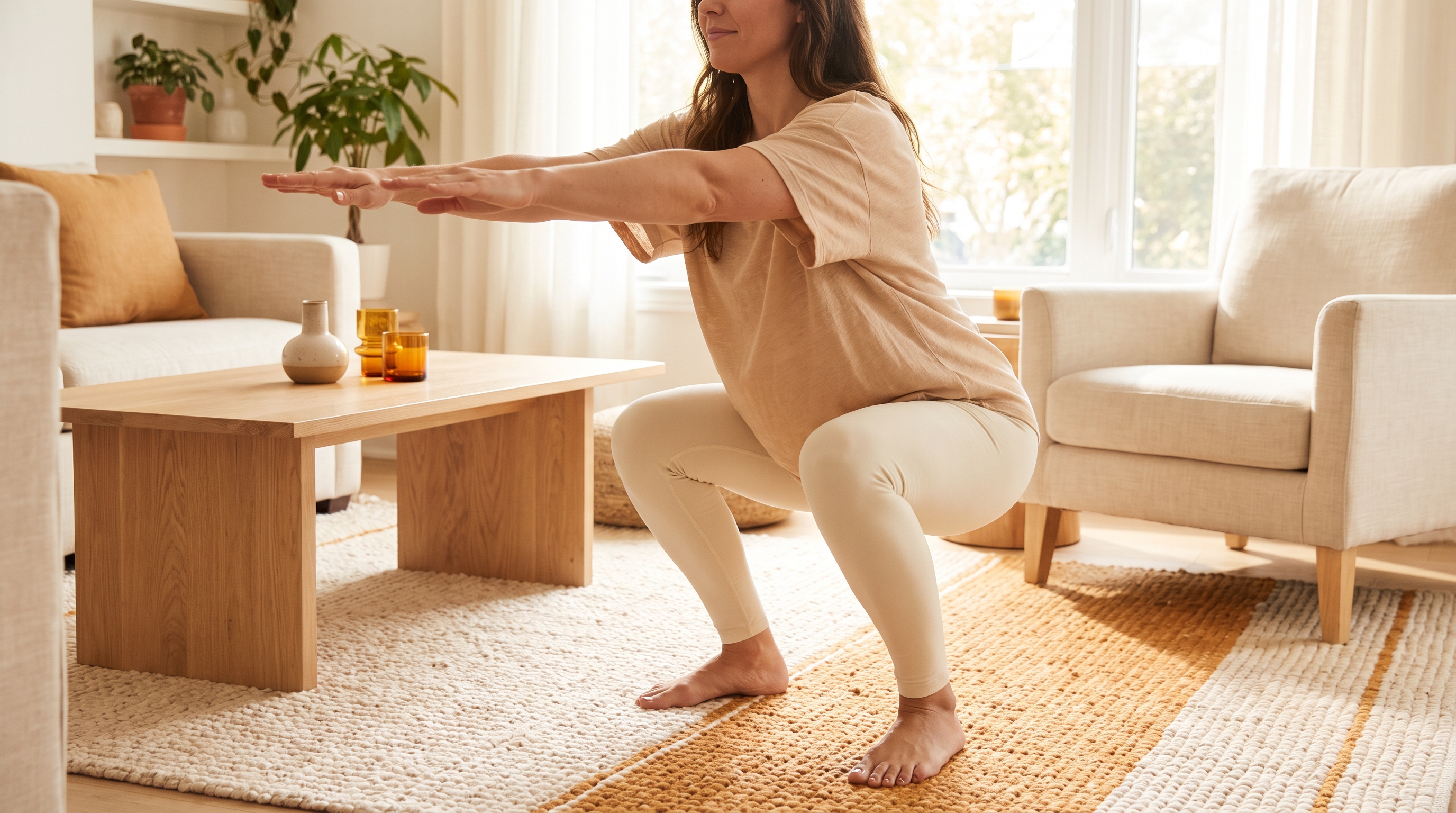
| Bodyweight Squats | 3 | 12-15 |
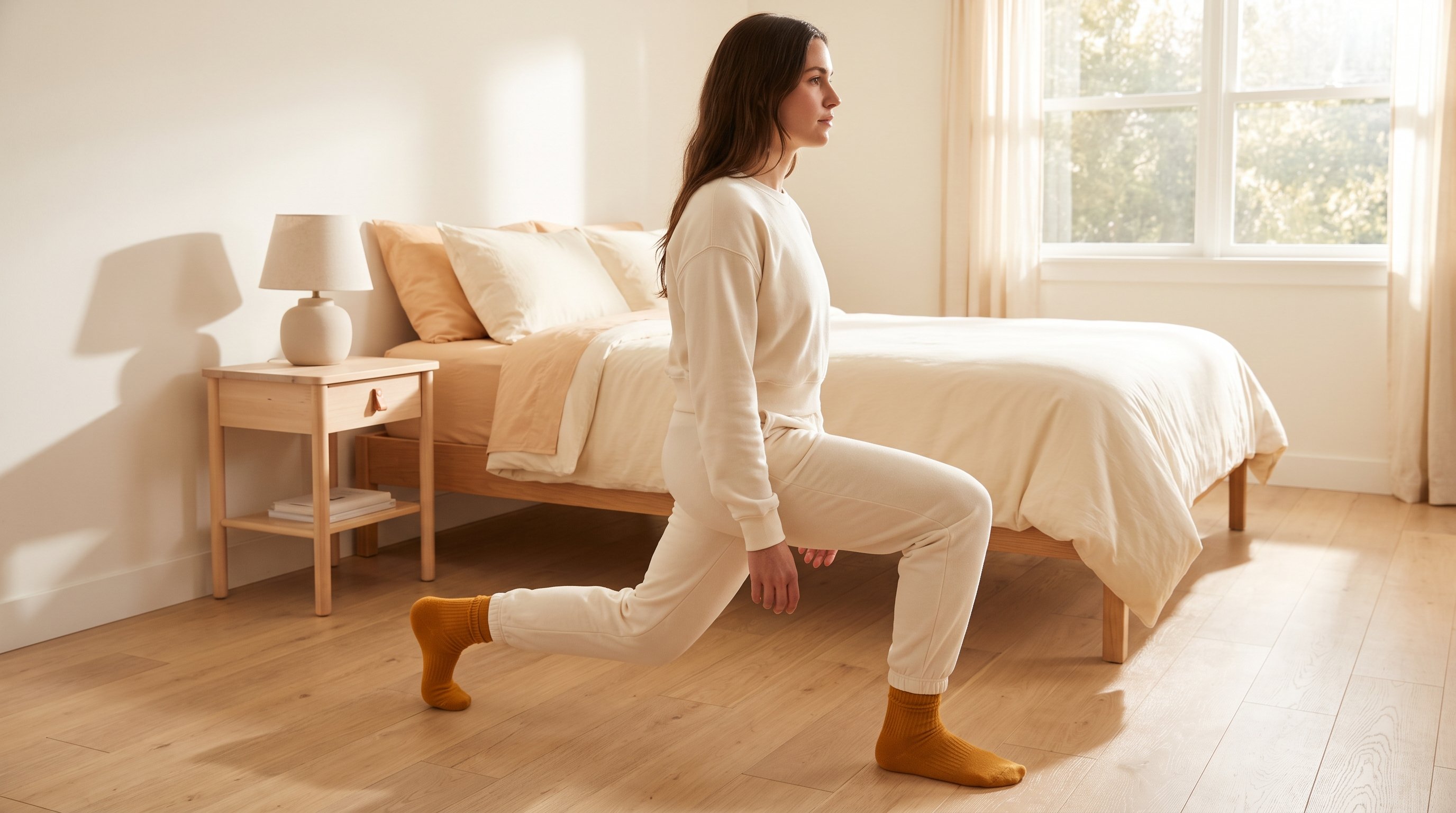
| Lunges (each leg) | 3 | 10-12 |
| Glute Bridges | 3 | 12-15 |
| Step-Ups (each leg) | 2-3 | 10-12 |
| Calf Raises | 3 | 15-20 |
Two to three sessions a week, with a rest day between, gives the muscles time to recover before the next round of work.
Bodyweight Squats Versus a Loaded Gym Leg Day
A loaded gym leg day with a barbell squat rack and a leg press machine can build strength fast, but only on the days someone actually gets there.
A bodyweight leg workout at home skips the drive, the waiting for equipment and the membership fee, which means it gets done more often.
More often, repeated over time, tends to beat occasional and intense - the body doesn't know the difference between a squat done in a bedroom and one done under a bar, it just knows whether the work happened.
That's the real trade-off: convenience that gets repeated versus intensity that gets skipped.
Fitting Leg Training Around a Packed Schedule
A home leg session doesn't need a block of free time - fifteen to twenty minutes before a shower or during a lunch break covers it.
No commute, no changing rooms, no waiting for a machine to free up.
The food side of the week matters here too, since muscles rebuild from what's eaten as much as from what's trained - this is where a meal plan built around food you already like can take one decision off the table each day.
Asian Diet pairs that kind of tailored eating guidance with its own library of home-friendly workouts, so the training and the food side don't have to be planned separately.
Adjusting Leg Moves for Different Bodies and Schedules
Starting From Scratch
Someone new to training can drop the reps down to eight to ten per set and skip the jump-based variations entirely, focusing on controlled squats and bridges first.
Short on Time
A busy parent or shift worker can compress the whole session into ten minutes by picking three exercises instead of five and moving straight from one to the next.
Training With Joint Concerns
An older adult or anyone with knee sensitivity can hold onto a chair back during squats and lunges for balance, and swap deep lunges for shallower step-ups.
Already Fairly Active
Anyone already walking regularly or doing other cardio can add a slow three-second lowering phase to each squat and lunge, which asks more of the muscle without adding any equipment.
When Leg Strength Starts to Feel Different
Most people notice stairs feel a bit less effortful and standing up from a low chair gets easier before anything shows up in the mirror.
That shift in daily movement tends to arrive before any visible change, and it's worth paying attention to rather than waiting on the mirror.
The drop-off point is usually around the second or third week, right when the new habit stops feeling exciting and starts feeling like admin - sessions that are already short and equipment-free are easier to keep going through that stretch.
Making a Home Leg Routine Easier With Asian Diet
Keeping a leg routine going is partly about the moves and partly about everything around them - sleep, food, and whether the week feels manageable or chaotic.
Asian Diet's library of 100+ workouts and exercises includes bodyweight leg sessions you can follow without buying anything, alongside guided meditations for the days training feels like a chore rather than a win.
Progress tracking in the app keeps steps, water and weight in one place, so a leg routine isn't the only thing you're trying to remember to log.
Power Your Body Daily
Eat Clean Every Day
Getting Your First Session Done Today
The fastest way to start is picking three moves from the table above, setting a timer for fifteen minutes, and doing them in a corner of any room.
Asian Diet can take the food planning off your plate while that habit beds in, which leaves more attention free for the actual training.
FAQ
Yes - bodyweight squats, lunges and step-ups load the same muscle groups a gym machine does, just using your own bodyweight as the resistance. The muscle doesn't know whether the resistance came from a machine or from gravity and your own limbs.
Bodyweight training has a ceiling, but most people are nowhere near it, and reps, tempo and single-leg variations all add difficulty without adding a single dumbbell. Weights can always be added later if someone wants to keep progressing.
Most of these moves need less than a square metre of floor - a squat, a lunge and a calf raise all fit in the space it takes to stand still. A chair for balance is the only extra item most people need.
Boredom with the same five moves and not seeing an immediate change are the two biggest drop-off points. Pairing the routine with Asian Diet's tracking tools and broader workout library can make the week feel less repetitive and easier to stick with.
Share this post