How To Meal Prep For The Week: A Simple Starting System
By:Author:Asian Diet Editorial
Updated on:October 18, 2026
- What a Prepped Week Actually Looks Like
- How Many Meals to Prep at Once
- Prepping Ahead Versus Cooking Every Night
- Fitting a Prep Routine Into a Real Week
- Adjusting Prep for Different Schedules
- When Meal Prep Habits Usually Settle In
- Making Weekly Meal Prep Easier With Asian Diet
- Starting Your First Week of Prep
Meal prepping for the week means cooking and portioning most of your meals in one or two sessions, so decisions about food are already made before you're hungry and tired.
It works because it removes the moment where willpower usually fails - the 7pm decision between cooking from scratch and ordering in. When the food is already done, that decision doesn't exist.
This guide covers what a prepped week actually looks like, how much to cook, why it beats cooking from scratch daily, and how to fit it around a real schedule.
What a Prepped Week Actually Looks Like
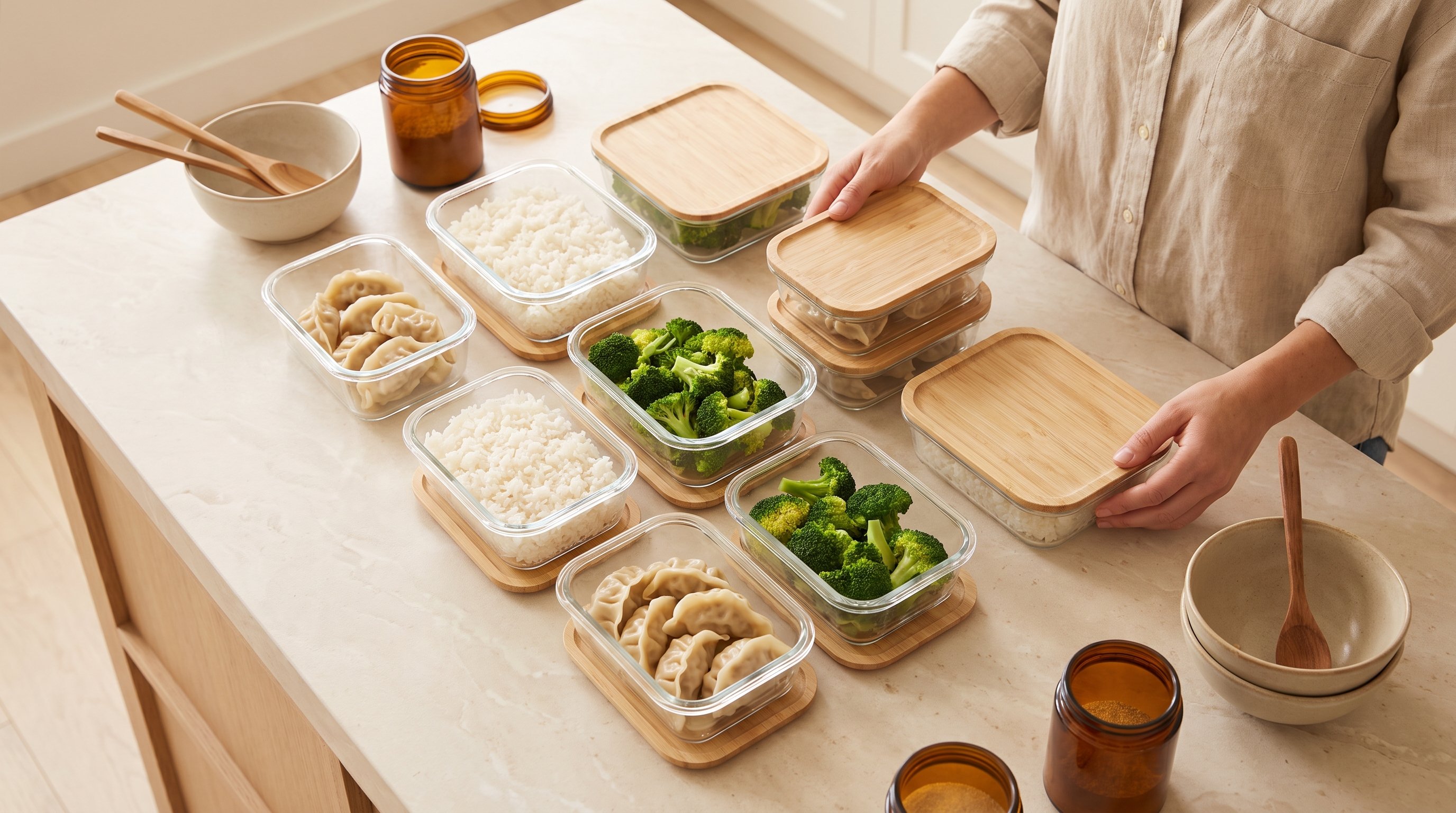
A workable week doesn't mean seven identical containers. It usually means a few cooked components that get mixed and matched across the week.
A Sample Weekly Setup
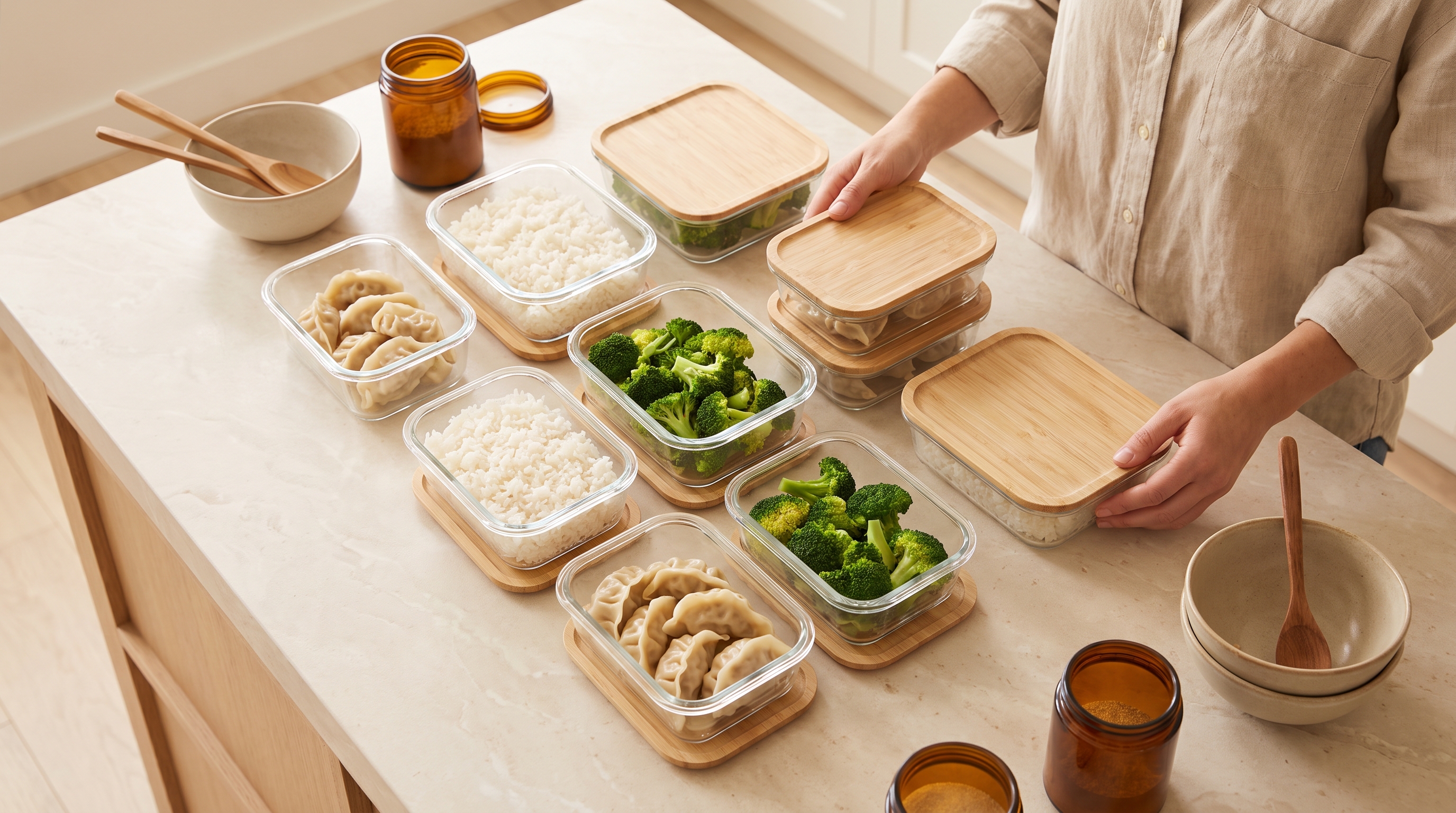
- Sunday batch cook - a grain, a protein, and two vegetables cooked in bulk, enough for four to five lunches.
- Wednesday top-up - a quicker second cook halfway through the week so nothing sits too long in the fridge.
- Breakfasts prepped separately - something that holds well, like overnight oats or boiled eggs, made in one batch for the week.
- One flexible dinner slot - left unplanned for a night out, leftovers, or whatever the week throws at you.
The point isn't rigid sameness. It's having the building blocks ready so dinner takes ten minutes instead of forty.
How Many Meals to Prep at Once
Start Smaller Than You Think
Most people overestimate how many meals they'll actually want to eat from a container by day four or five. Prepping for four days instead of seven, then topping up midweek, tends to hold up better.
| Prep Goal | Meals To Cook | Sessions Per Week |
|---|---|---|
| Lunches only | 4 to 5 | One |
| Lunches and dinners | 8 to 10 | Two |
| All meals | 14 to 18 | Two to three |
| Breakfasts only | 5 | One |
Prepping Ahead Versus Cooking Every Night
Cooking from scratch every single night sounds more virtuous, but it asks for a decision and an effort at the exact moment you have the least energy for either.
Meal prepping for the week moves that effort to a moment when you do have energy - a free Sunday afternoon - and then coasts on it. Fewer decisions during the week means fewer chances to default to whatever's fastest, which is rarely the thing you'd have chosen in advance.

Neither approach is wrong. But if the goal is consistency over months, prepping ahead removes more friction than nightly cooking ever will.
Fitting a Prep Routine Into a Real Week
The usual reason prepping stalls isn't lack of willpower - it's not knowing what to cook, which turns a two-hour task into a three-hour one with a grocery run stuck in the middle.
Having a meal plan already built around food you actually like cuts that planning step out entirely, which is one of the things Asian Diet is built to handle, alongside smart calorie guidance so portions don't need to be guessed at.
Less time spent deciding what to cook means more of the prep window actually goes to cooking.
Adjusting Prep for Different Schedules
If You're Just Starting Out
Pick two meals a day to prep, not three, and keep the recipe list short - five or six repeatable dishes beats twenty ambitious ones. The goal in the first few weeks is building the habit of prepping at all, not variety.
If You're Short on Time
One-pan or one-pot meals cut cleanup in half, and cooking double portions of whatever you're already making for dinner tonight covers tomorrow's lunch for free. Fifteen extra minutes tonight can save forty minutes later in the week.

If You're Cooking for Older Adults
Softer textures and smaller, more frequent portions often work better than large dense containers, so splitting batches into smaller servings can help food actually get eaten rather than left. A step counter or water tracker alongside meal prep can also help keep the rest of the day's habits visible.
If You're Cooking for a Family
Base components - a grain, a protein, a sauce - that everyone can customise at the table avoid cooking separate meals for different preferences. It also means one big batch cook covers more mouths without extra effort.
When Meal Prep Habits Usually Settle In
The first two weeks are the hardest part, mostly because the grocery list and the cooking routine haven't settled yet. Most people quit somewhere around week two or three, right when it starts feeling repetitive rather than novel.
That's not a sign it isn't working - it's usually a sign the recipe rotation needs widening, not a sign to stop. Give it time to become routine rather than expecting it to feel effortless from day one.
Making Weekly Meal Prep Easier With Asian Diet
Prepping for the week gets a lot simpler when the recipes, portions, and shopping list are already sorted out before you even open the fridge.
Asian Diet brings together a tailored meal plan from over 1,000 recipes, smart calorie guidance so portions don't need to be eyeballed, and progress tracking so the effort you put into prepping actually shows up somewhere. It takes the guesswork out of the planning step, which is usually the part that makes people quit before they've even started cooking.
Power Your Body Daily
Eat Clean Every Day
Starting Your First Week of Prep
Pick one session this week - two hours, one afternoon - and cook enough for four lunches using ingredients you already like. That's the whole starting point; everything else is refinement.
Asian Diet can take the planning and portioning off your plate so that first session is about cooking, not deciding what to cook.
FAQ
It helps indirectly, by making it easier to stick to planned portions instead of defaulting to whatever's quickest when you're hungry. The food itself isn't magic - the benefit comes from the deficit being easier to hold consistently.
It takes a couple of hours once or twice a week, which is usually less time than cooking separately every single night adds up to. Starting with just two meals a day rather than all three makes the time commitment smaller still.
Prepping for four days instead of seven cuts the storage need roughly in half, and a midweek top-up session covers the rest. A few good containers go further than a big fridge.
Boredom usually means the recipe rotation is too narrow, not that prepping itself has failed. Asian Diet's recipe library gives more variety to rotate through, so the same few dishes don't have to carry the whole week.
Share this post